Hai una struttura ricettiva a Stresa? Questa pagina può portare il suo nome, con poster e QR per i tuoi ospiti.

Guarda la tua anteprima

Stresa

Gli animali osservati nei dintorniWildlife observed nearby

Osservazioni delle 30 specie di questa pagina entro 10 km, mese per mese.Observations of the 30 species on this page within 10 km, month by month.

30 specie animali osservate entro 10 km da Stresa, un po' per ogni gruppo, con i mesi in cui sono state viste. Vengono da 1.340 osservazioni pubbliche di 41 persone su iNaturalist, aggiornate al 13 novembre 2026. Dicono dove le persone hanno visto e fotografato un animale, non garantiscono avvistamenti.30 animal species observed within 10 km of Stresa, a few from each group, with the months they were seen. They come from 1,340 public observations by 41 people on iNaturalist, updated on 13 November 2026. They show where people have seen and photographed an animal; they do not guarantee sightings.

UccelliBirds10 specie10 species

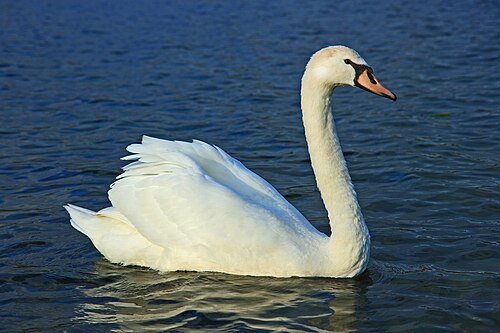
Cygnus olor
FotoPhoto: Sanchezn, CC BY-SA 3.0, originaleoriginal

Cigno realeMute Swan

Mute Swan

Cigno reale

Cygnus olor

Il cigno reale (Cygnus olor (Gmelin, 1789)) è un uccello acquatico appartenente alla famiglia Anatidae, originario dell'Eurasia ma introdotto anche in America del Nord, Oceania e Africa Meridionale. Wikipedia

The mute swan (Cygnus olor) is a species of swan and a member of the family Anatidae within the waterfowl order. It is native to much of Europe and parts of Asia and (as a rare winter visitor) the far north of Africa. Wikipedia

Osservata 14 volte entro 10 km.Observed 14 times within 10 km.

Mesi migliori: settembre.Best months: September.
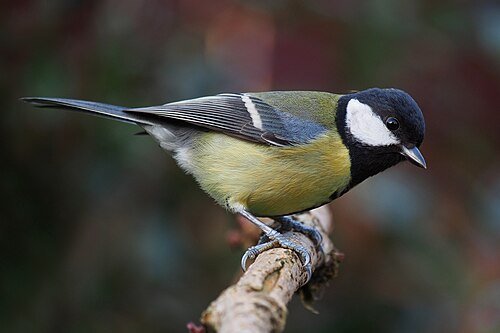
Parus major
FotoPhoto: Francis Franklin, CC BY-SA 4.0, originaleoriginal

CinciallegraGreat Tit

Great Tit

Cinciallegra

Parus major

La cinciallegra (Parus major Linnaeus, 1758) è un uccello passeriforme appartenente alla famiglia dei Paridi. Wikipedia

The great tit (Parus major) is a small passerine bird in the tit family Paridae. It is widespread and common throughout Europe, the Middle East, Central Asia and as far east as the Amur River. It also occurs in parts of North Africa where it is generally resident in any sort of woodland. Wikipedia

Osservata 13 volte entro 10 km.Observed 13 times within 10 km.

Mesi migliori: gennaio.Best months: January.

Phalacrocorax carbo
FotoPhoto: JJ Harrison (https://www.jjharrison.com.au/), CC BY-SA 3.0, originaleoriginal

Cormorano comuneGreat Cormorant

Great Cormorant

Cormorano comune

Phalacrocorax carbo

Il cormorano comune (Phalacrocorax carbo Linnaeus, 1758) è un uccello acquatico della famiglia dei Falacrocoracidi diffuso in tutta l'Eurasia e l'Australasia, nonché nelle regioni nord-orientali dell'America Settentrionale e in quelle settentrionali dell'Africa. Wikipedia

The great cormorant (Phalacrocorax carbo), also known as just cormorant in Britain, as black shag or kawau in New Zealand, formerly also known as the great black cormorant across the Northern Hemisphere, the black cormorant in Australia, and the large cormorant in India, is a widespread member of the cormorant family… Wikipedia

Osservata 13 volte entro 10 km.Observed 13 times within 10 km.

Mesi migliori: gennaio, novembre.Best months: January, November.

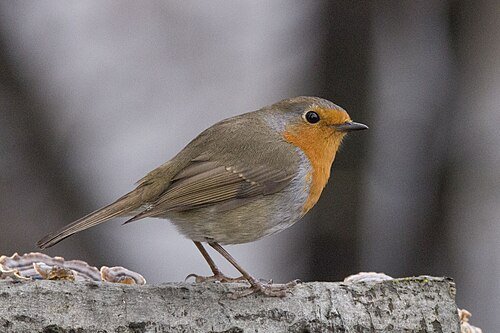
Erithacus rubecula
FotoPhoto: Rory from Glasgow, United Kingdom, CC BY 2.0, originaleoriginal

PettirossoEuropean Robin

European Robin

Pettirosso

Erithacus rubecula

Il pettirosso (Erithacus rubecula (Linnaeus, 1758)) è un piccolo uccello passeriforme della famiglia dei Muscicapidae, in passato classificato come facente parte della famiglia dei Turdidae. È l'unica specie nota del genere Erithacus. Wikipedia

The European robin (Erithacus rubecula), known simply as the robin or robin redbreast in the British Isles, is a small insectivorous passerine bird belonging to the Old World flycatcher family Muscicapidae. It is found across Europe, as far east as Western Siberia, and as far south as North Africa. Wikipedia

Osservata 12 volte entro 10 km.Observed 12 times within 10 km.

Mesi migliori: gennaio.Best months: January.

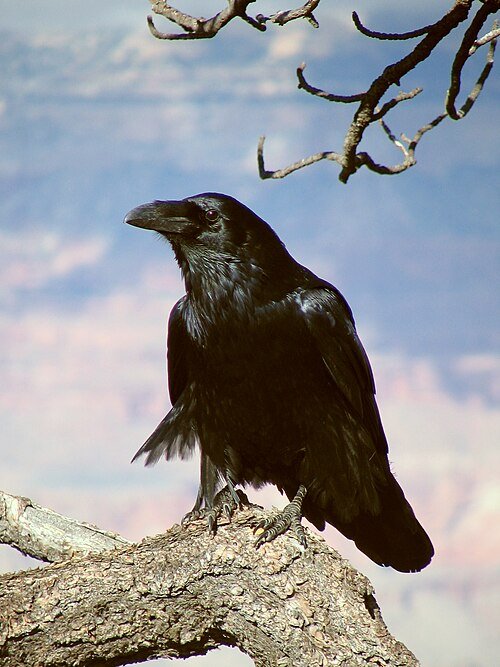
Corvus corax
FotoPhoto: Aaron, CC BY 2.0, originaleoriginal

Corvo imperialeCommon Raven

Common Raven

Corvo imperiale

Corvus corax

Il corvo imperiale (Corvus corax Linnaeus, 1758) è un uccello passeriforme appartenente alla famiglia Corvidae. Wikipedia

The common raven or northern raven (Corvus corax) is a large all-black passerine bird. It is the most widely distributed of all corvids, found across the Northern Hemisphere. Wikipedia

Osservata 10 volte entro 10 km.Observed 10 times within 10 km.

Mesi migliori: settembre, novembre.Best months: September, November.

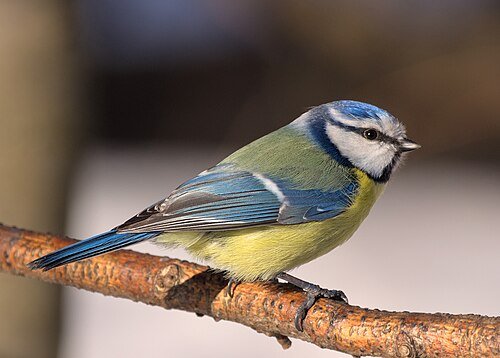
Cyanistes caeruleus
FotoPhoto: Dion Art, CC BY-SA 4.0, originaleoriginal

CinciarellaEurasian Blue Tit

Eurasian Blue Tit

Cinciarella

Cyanistes caeruleus

La cinciarella (Cyanistes caeruleus (Linnaeus, 1758)) è un uccello passeriforme appartenente alla famiglia dei Paridi. Wikipedia

The Eurasian blue tit (Cyanistes caeruleus) is a small passerine bird in the tit family, Paridae. It is easily recognised by its blue and yellow plumage and small size. The Eurasian blue tit is a widespread and common resident breeder throughout temperate and subarctic Europe and parts of western Asia. Wikipedia

Osservata 10 volte entro 10 km.Observed 10 times within 10 km.

Mesi migliori: gennaio.Best months: January.

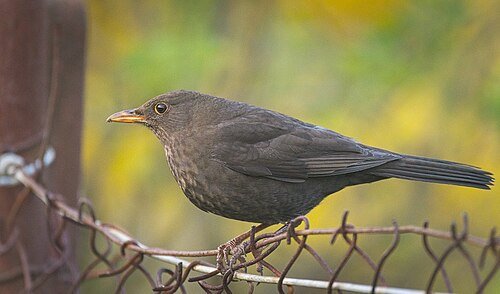
Turdus merula
FotoPhoto: hedera.baltica from Wrocław, Poland, CC BY-SA 2.0, originaleoriginal

MerloEurasian Blackbird

Eurasian Blackbird

Merlo

Turdus merula

Il merlo (Turdus merula Linnaeus, 1758) è un uccello passeriforme della famiglia dei Turdidi. Di taglia media, il maschio ha una livrea completamente nera e il becco giallo, mentre la femmina è bruno-nerastra. Wikipedia

The common blackbird (Turdus merula) is a species of true thrush. It is also known as the Eurasian blackbird (especially in North America, to distinguish it from the distinct New World blackbirds), or simply the blackbird. Wikipedia

Osservata 10 volte entro 10 km.Observed 10 times within 10 km.

Mesi migliori: gennaio.Best months: January.

CodibugnoloLong-tailed Tit

Long-tailed Tit

Codibugnolo

Aegithalos caudatus

Il codibùgnolo (Aegithalos caudatus (Linnaeus, 1758)) è un uccello passeriforme della famiglia Aegithalidae. Wikipedia

The long-tailed tit or long-tailed bushtit (Aegithalos caudatus) is a common bird species belonging to the bushtit family found throughout Eurasia. An insectivore, it inhabits deciduous and mixed woodlands as well as scrub, heathland, farmland, parks and gardens. Wikipedia

Osservata 9 volte entro 10 km.Observed 9 times within 10 km.

Mesi migliori: gennaio, novembre.Best months: January, November.

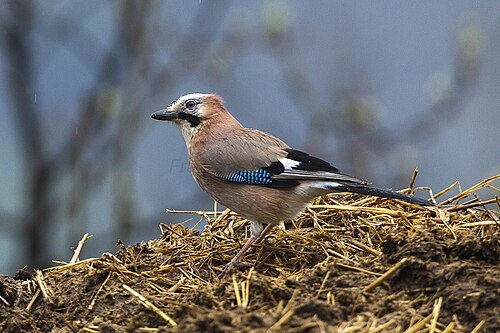
Garrulus glandarius
FotoPhoto: Francesco Veronesi from Italy, CC BY-SA 2.0, originaleoriginal

GhiandaiaEurasian Jay

Eurasian Jay

Ghiandaia

Garrulus glandarius

La ghiandaia (Garrulus glandarius (Linnaeus, 1758)) è un uccello passeriforme appartenente alla famiglia dei Corvidae. Wikipedia

The Eurasian jay (Garrulus glandarius) is a species of passerine bird in the family Corvidae. It has pinkish brown plumage with a black stripe on each side of a whitish throat, a bright blue panel on the upper wing and a black tail. Wikipedia

Osservata 9 volte entro 10 km.Observed 9 times within 10 km.

Mesi migliori: gennaio.Best months: January.

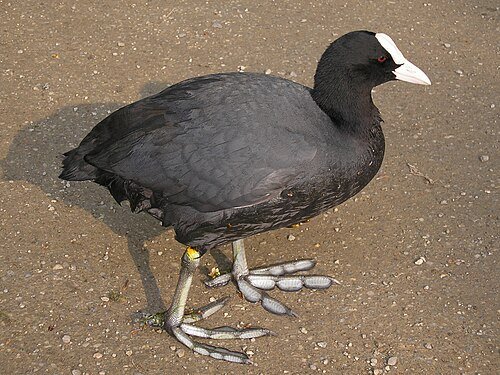
Fulica atra
FotoPhoto: Duhon, CC BY 3.0, originaleoriginal

Folaga eurasiaticaEurasian Coot

Eurasian Coot

Folaga eurasiatica

Fulica atra

La folaga comune (Fulica atra Linnaeus, 1758) è un uccello gruiforme della famiglia dei Rallidi originario di Eurasia, Africa, Nuova Guinea, Australia e Nuova Zelanda. Wikipedia

The Eurasian coot (Fulica atra), also known as the common coot or Australian coot, is a member of the rail and crake bird family, the Rallidae. It is found in Europe, Asia, Australia, New Zealand and parts of North Africa. It has a slaty-black body, a glossy black head and a white bill with a white frontal shield. Wikipedia

Osservata 8 volte entro 10 km.Observed 8 times within 10 km.

Mesi migliori: gennaio, giugno.Best months: January, June.

MammiferiMammals5 specie5 species

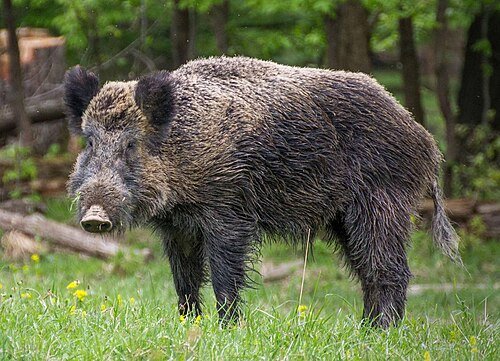
Sus scrofa
FotoPhoto: Valentin Panzirsch, CC BY-SA 3.0 at, originaleoriginal

CinghialeWild Boar

Wild Boar

Cinghiale

Sus scrofa

Il cinghiale comune (Sus scrofa Linnaeus, 1758) è un mammifero artiodattilo appartenente alla famiglia Suidae. Wikipedia

The wild boar (Sus scrofa), also known as the wild swine, common wild pig, Eurasian wild pig, or simply wild pig, is a suid native to much of Eurasia and North Africa and has been introduced to the Americas and Oceania. Wikipedia

Osservata 12 volte entro 10 km.Observed 12 times within 10 km.

Mesi migliori: aprile, giugno.Best months: April, June.

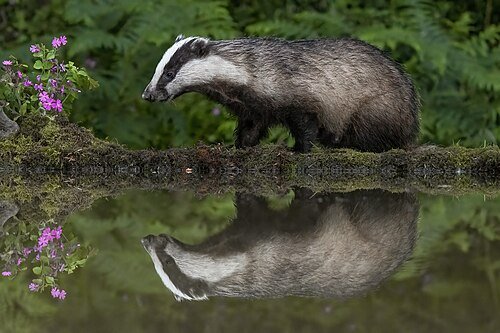
Meles meles
FotoPhoto: caroline legg, CC BY 2.0, originaleoriginal

Tasso europeoEuropean Badger

European Badger

Tasso europeo

Meles meles

Il tasso comune (Meles meles Linnaeus, 1758), noto anche come tasso eurasiatico o tasso europeo, è una specie di mammifero carnivoro appartenente alla famiglia Mustelidae. Wikipedia

The European badger (Meles meles), also known as the Eurasian badger, is a species of badger in the family Mustelidae native to Europe and West Asia and parts of Central Asia. Wikipedia

Osservata 4 volte entro 10 km.Observed 4 times within 10 km.

Vista in: febbraio (1), aprile (2), giugno (1).Seen in: February (1), April (2), June (1).

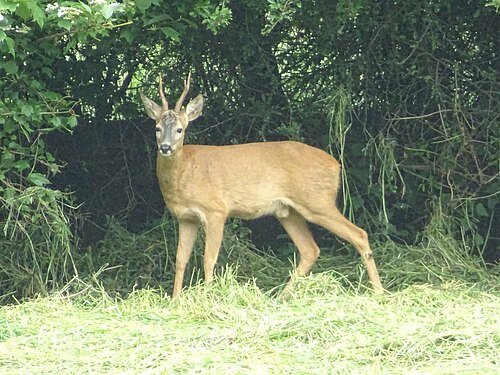
Capreolus capreolus
FotoPhoto: Karbohut, CC BY-SA 4.0, originaleoriginal

CaprioloWestern Roe Deer

Western Roe Deer

Capriolo

Capreolus capreolus

Il capriolo eurasiatico (Capreolus capreolus, Linnaeus, 1758) è un ungulato diffuso in Eurasia. Wikipedia

The roe deer (Capreolus capreolus), also known as the roe, western roe deer, or European roe, is a species of deer. The male of the species is sometimes referred to as a roebuck. The roe is a small deer, reddish and grey-brown, and well-adapted to cold environments. Wikipedia

Osservata 2 volte entro 10 km.Observed 2 times within 10 km.

Vista in: giugno (1), ottobre (1).Seen in: June (1), October (1).

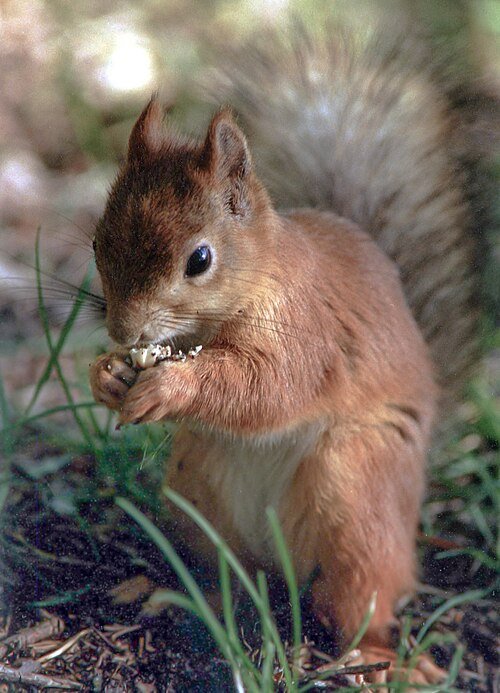
Sciurus vulgaris
FotoPhoto: Toivo Toivanen & Tiina Toppila, Public domain, originaleoriginal

Scoiattolo rossoEurasian Red Squirrel

Eurasian Red Squirrel

Scoiattolo rosso

Sciurus vulgaris

Lo scoiattolo rosso (Sciurus vulgaris Linnaeus, 1758) è un mammifero che appartiene alla famiglia degli Sciuridae, dell'ordine dei Roditori, della classe dei Mammiferi. Wikipedia

The red squirrel (Sciurus vulgaris), also called Eurasian red squirrel, is a species of tree squirrel in the genus Sciurus. It is an arboreal and primarily herbivorous rodent and common throughout Eurasia. Wikipedia

Osservata 2 volte entro 10 km.Observed 2 times within 10 km.

Vista in: gennaio (1), agosto (1).Seen in: January (1), August (1).

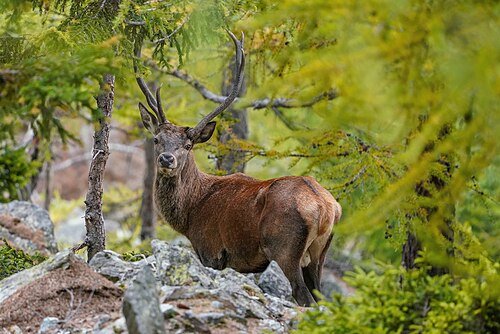
Cervus elaphus
FotoPhoto: Giles Laurent, CC BY-SA 4.0, originaleoriginal

Cervo nobileRed Deer

Red Deer

Cervo nobile

Cervus elaphus

Il cervo nobile (Cervus elaphus Linnaeus, 1758), noto anche come cervo reale, cervo rosso o cervo europeo, è un mammifero artiodattilo appartenente alla famiglia dei Cervidi. Wikipedia

The red deer (Cervus elaphus) is a species of deer in the genus Cervus. It is one of the largest deer species. A male red deer is called a stag or hart, and a female is called a hind. Wikipedia

Osservata 1 volta entro 10 km.Observed once within 10 km.

Vista in: settembre (1).Seen in: September (1).

RettiliReptiles3 specie3 species

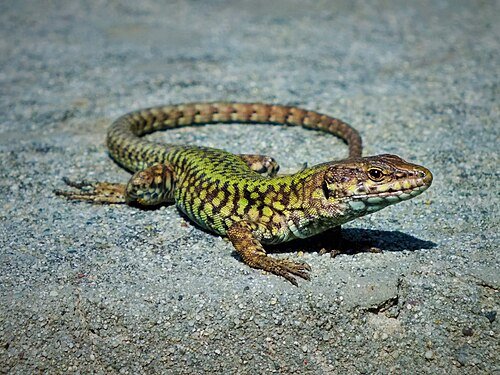
Podarcis muralis
FotoPhoto: Mariomassone, CC BY-SA 4.0, originaleoriginal

Lucertola muraiolaCommon Wall Lizard

Common Wall Lizard

Lucertola muraiola

Podarcis muralis

La lucertola muraiola (Podarcis muralis Laurenti, 1768), nota anche come lucertola dei muri, lucertola delle muraglie, lucertola murale o semplicemente muraiola, è un rettile appartenente alla famiglia Lacertidae. Wikipedia

The common wall lizard (Podarcis muralis) is a species of lizard with a large distribution in Europe and well-established introduced populations in North America, where it is also called the European wall lizard. It can grow to about 20 cm (7.9 in) in total length. Wikipedia

Osservata 21 volte entro 10 km.Observed 21 times within 10 km.

Mesi migliori: aprile.Best months: April.

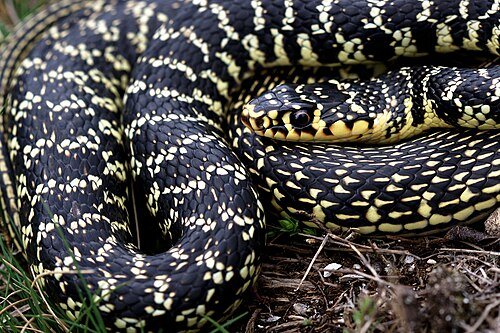
Hierophis viridiflavus
FotoPhoto: FelixReimann, CC BY-SA 3.0, originaleoriginal

BiaccoGreen Whip Snake

Green Whip Snake

Biacco

Hierophis viridiflavus

Il biacco (Hierophis viridiflavus (Lacépède, 1789)), precedentemente classificato come Coluber viridiflavus, è un serpente non velenoso per l'uomo della famiglia dei Colubridi, frequente nelle campagne e nei giardini, sia in terreni rocciosi, secchi e soleggiati, sia in luoghi più umidi come le praterie e le rive dei… Wikipedia

The green whip snake or western whip snake (Hierophis viridiflavus) is a species of snake in the family Colubridae. Wikipedia

Osservata 6 volte entro 10 km.Observed 6 times within 10 km.

Mesi migliori: maggio.Best months: May.

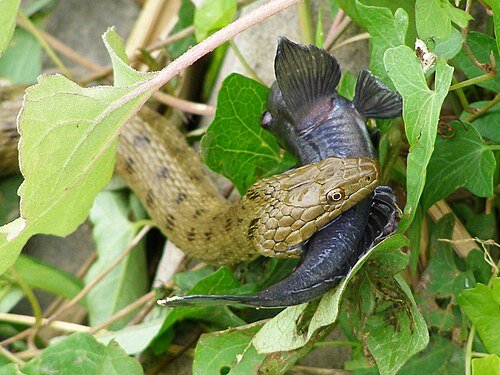
Natrix tessellata
FotoPhoto: Andrei Daniel Mihalca (Histria2006), CC BY-SA 3.0, originaleoriginal

Natrice tassellataTessellated Water Snake

Tessellated Water Snake

Natrice tassellata

Natrix tessellata

La biscia tassellata (Natrix tessellata (Laurenti, 1768)) è un serpente europeo non velenoso della superfamiglia Colubroidea, famiglia Natricidae. Wikipedia

The dice snake (Natrix tessellata) or water snake is a Eurasian nonvenomous snake in the family Colubridae, subfamily Natricinae. Its average length is 1.0–1.3 m (39–51 in). Body color may vary from greyish green to brownish or almost black, with dark spots on the back. Wikipedia

Osservata 3 volte entro 10 km.Observed 3 times within 10 km.

Vista in: maggio (1), agosto (1), ottobre (1).Seen in: May (1), August (1), October (1).

AnfibiAmphibians1 specie1 species

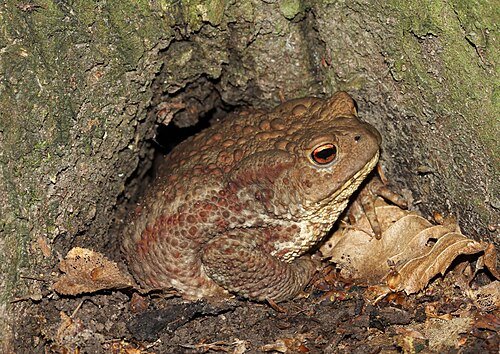
Bufo bufo
FotoPhoto: George Chernilevsky, Public domain, originaleoriginal

Rospo comuneEuropean Toad

European Toad

Rospo comune

Bufo bufo

Il rospo comune (Bufo bufo (Linnaeus, 1758)) o rospo europeo è un anfibio anuro della famiglia Bufonidae, diffuso in Eurasia (con l'eccezione di Irlanda, Islanda, Scandinavia settentrionale e alcune isole del mar Mediterraneo) e nel nord-ovest dell'Africa. Wikipedia

The common toad, also known as European toad or simply the toad in Anglophone parts of Europe (Bufo bufo, from Latin bufo "toad"), is a toad found throughout most of Europe (excluding Iceland, Ireland, parts of Scandinavia, and some Mediterranean islands), western North Asia and a small part of Northwest Africa. Wikipedia

Osservata 4 volte entro 10 km.Observed 4 times within 10 km.

Vista in: aprile (1), maggio (1), settembre (2).Seen in: April (1), May (1), September (2).

InsettiInsects6 specie6 species

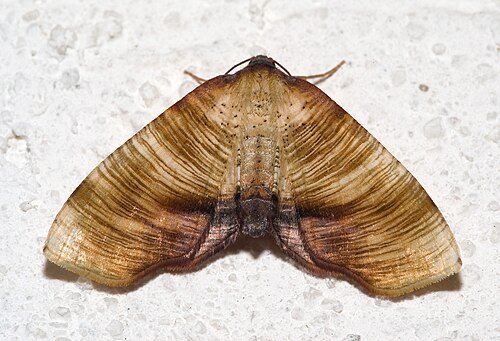
Plagodis dolabraria
FotoPhoto: Kulac, CC BY-SA 3.0, originaleoriginal

Scorched Wing

Plagodis dolabraria

Plagodis dolabraria, the scorched wing, is a moth of the family Geometridae. The species was first described by Carl Linnaeus in 1767. It is found throughout Europe and through the Palearctic, east to Transcaucasia, south east Siberia and Japan. Wikipedia

Plagodis dolabraria, the scorched wing, is a moth of the family Geometridae. The species was first described by Carl Linnaeus in 1767. It is found throughout Europe and through the Palearctic, east to Transcaucasia, south east Siberia and Japan. Wikipedia

Osservata 27 volte entro 10 km.Observed 27 times within 10 km.

Mesi migliori: aprile, luglio.Best months: April, July.

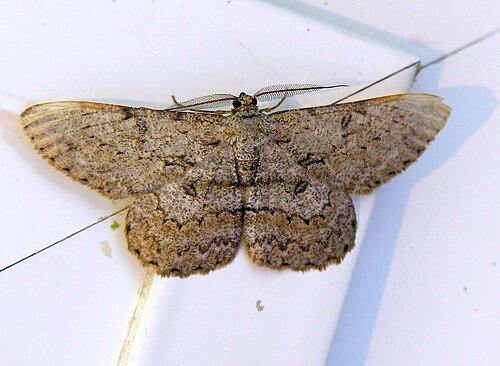
Lycia hirtaria
FotoPhoto: Olei, CC BY-SA 3.0, originaleoriginal

Brindled Beauty Moth

Lycia hirtaria

The brindled beauty (Lycia hirtaria) is a Palearctic moth belonging to the family Geometridae. Wikipedia

The brindled beauty (Lycia hirtaria) is a Palearctic moth belonging to the family Geometridae. Wikipedia

Osservata 24 volte entro 10 km.Observed 24 times within 10 km.

Mesi migliori: marzo–aprile.Best months: March–April.

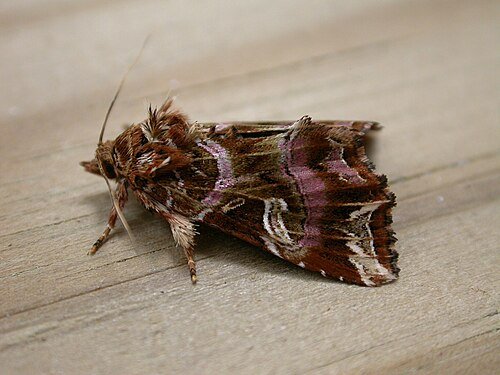
Callopistria juventina
FotoPhoto: Donald Hobern from Canberra, Australia, CC BY 2.0, originaleoriginal

The Latin

Callopistria juventina

Callopistria juventina, the Latin name, is a moth of the family Noctuidae. The species is found across the Palearctic realm. Wikipedia

Callopistria juventina, the Latin name, is a moth of the family Noctuidae. The species is found across the Palearctic realm. Wikipedia

Osservata 22 volte entro 10 km.Observed 22 times within 10 km.

Mesi migliori: giugno–agosto.Best months: June–August.

Falena punto esclamativoHeart and Dart

Heart and Dart

Falena punto esclamativo

Agrotis exclamationis

The heart and dart (Agrotis exclamationis) is a moth of the family Noctuidae. The species was first described by Carl Linnaeus in his 1758 10th edition of Systema Naturae. A familiar moth to many, it is considered one of the most common of the European region. Wikipedia

The heart and dart (Agrotis exclamationis) is a moth of the family Noctuidae. The species was first described by Carl Linnaeus in his 1758 10th edition of Systema Naturae. A familiar moth to many, it is considered one of the most common of the European region. Wikipedia

Osservata 16 volte entro 10 km.Observed 16 times within 10 km.

Mesi migliori: maggio, luglio–agosto.Best months: May, July–August.

The Flame

Axylia putris

The flame (Axylia putris) is a moth of the family Noctuidae. It is found throughout Europe then east across the Palearctic to Armenia, western Siberia and Amur, Korea and Japan. The range extends into northern India. Wikipedia

The flame (Axylia putris) is a moth of the family Noctuidae. It is found throughout Europe then east across the Palearctic to Armenia, western Siberia and Amur, Korea and Japan. The range extends into northern India. Wikipedia

Osservata 16 volte entro 10 km.Observed 16 times within 10 km.

Mesi migliori: aprile–giugno.Best months: April–June.

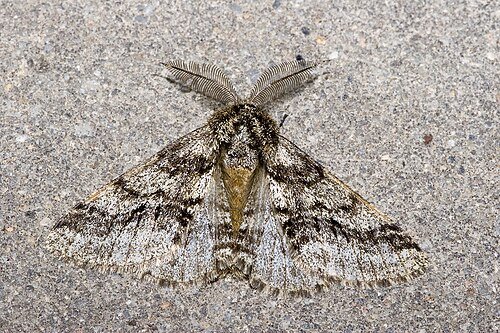
Hypomecis punctinalis
FotoPhoto: Luis Miguel Bugallo Sánchez (Lmbuga Commons)(Lmbuga Galipedia), CC BY-SA 3.0, originaleoriginal

Pale Oak Beauty

Hypomecis punctinalis

Hypomecis punctinalis, the pale oak beauty, is a moth of the family Geometridae. The species was first described by Giovanni Antonio Scopoli in his 1763 Entomologia Carniolica. Wikipedia

Hypomecis punctinalis, the pale oak beauty, is a moth of the family Geometridae. The species was first described by Giovanni Antonio Scopoli in his 1763 Entomologia Carniolica. Wikipedia

Osservata 15 volte entro 10 km.Observed 15 times within 10 km.

Mesi migliori: aprile–maggio.Best months: April–May.

AracnidiArachnids5 specie5 species

Ragno crociatoCross Orbweaver

Cross Orbweaver

Ragno crociato

Araneus diadematus

Araneus diadematus Clerck, 1757, noto comunemente con la denominazione di ragno crociato, è un ragno della famiglia Araneidae. Wikipedia

The spider species Araneus diadematus is commonly called the European garden spider, cross orbweaver, diadem spider, orangie, cross spider, and crowned orb weaver. It is sometimes called the pumpkin spider, although this name is also used for a different species, Araneus marmoreus. Wikipedia

Osservata 6 volte entro 10 km.Observed 6 times within 10 km.

Mesi migliori: agosto–settembre.Best months: August–September.

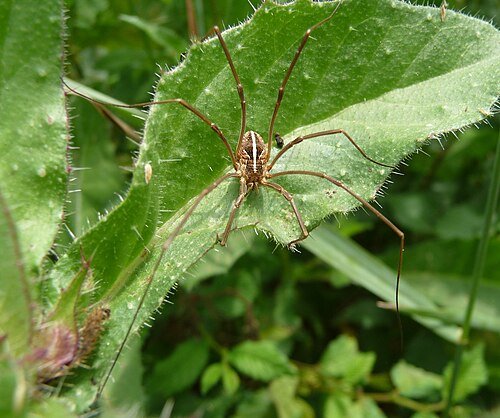
Mitopus morio
FotoPhoto: Lucarelli at de.wikipedia, CC BY-SA 3.0 de, originaleoriginal

Opilione di montagnaSaddleback Harvestman

Saddleback Harvestman

Opilione di montagna

Mitopus morio

Mitopus morio (Fabricius, 1799) è un opilionide appartenente alla famiglia Phalangiidae. Wikipedia

Mitopus morio is a species of harvestman arachnid belonging to the family Phalangiidae. Wikipedia

Osservata 5 volte entro 10 km.Observed 5 times within 10 km.

Mesi migliori: settembre.Best months: September.
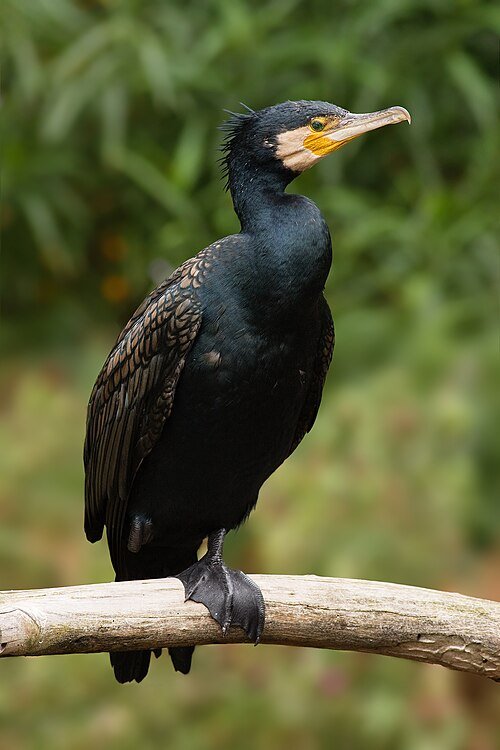
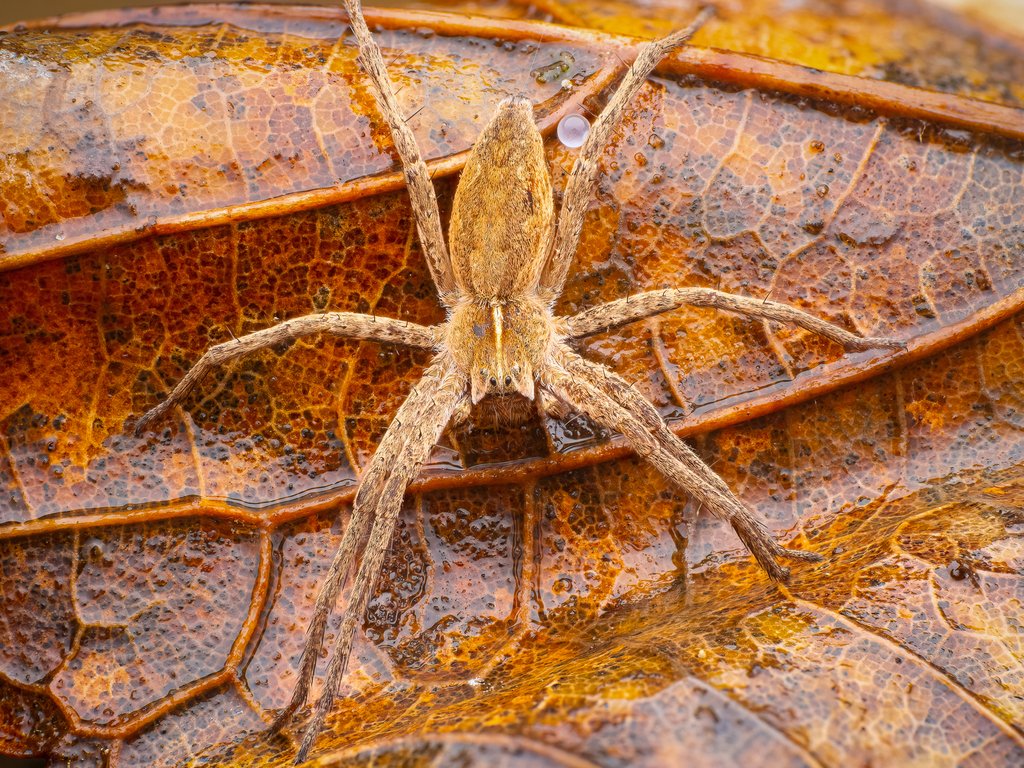
Pisaura mirabilis
FotoPhoto: Alexis Tinker-Tsavalas, CC BY 4.0, originaleoriginal

Ragno a tela d'asilo europeoEuropean Nursery Web spider

European Nursery Web spider

Ragno a tela d'asilo europeo

Pisaura mirabilis

Pisaura mirabilis CLERCK, 1757 è un ragno della famiglia dei Pisauridae. Ha una distribuzione paleartica e può essere rinvenuto in tutta Europa. Vive in tutti gli habitat, ma preferisce ambienti umidi, come prati umidi, brughiere di pianura, saline, dune, margini delle foreste e siepi umide. Wikipedia

Pisaura mirabilis, also known as the predatory spider, cunning spider or bridal gift spider, belongs to the hunting spider family (Pisauridae) and the superfamily Lycosoidea. It is widespread throughout Europe. In 2002, it was voted Spider of the Year by the Arachnological Society. Wikipedia

Osservata 4 volte entro 10 km.Observed 4 times within 10 km.

Vista in: aprile (1), maggio (1), giugno (2).Seen in: April (1), May (1), June (2).

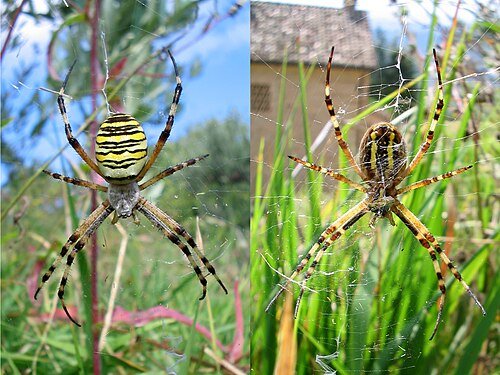
Argiope bruennichi
FotoPhoto: A7N8X, CC BY-SA 4.0, originaleoriginal

Ragno vespaWasp Spider

Wasp Spider

Ragno vespa

Argiope bruennichi

Il ragno vespa (Argiope bruennichi (Scopoli, 1772)) è una specie di ragno, così denominato per la colorazione dell'addome giallo e nera simile alla colorazione delle vespe. Viene anche chiamato comunemente ragno tigre, epeira fasciata, ragno zebra o argiope fasciata. Wikipedia

Argiope bruennichi, commonly known as the wasp spider, is a species of orb-weaver spider found across Central and Northern Europe, several regions of Asia and Africa and the Azores. Like many other members of the same genus Argiope, this species has distinctive yellow, white and black markings on its abdomen. Wikipedia

Osservata 3 volte entro 10 km.Observed 3 times within 10 km.

Vista in: agosto (3).Seen in: August (3).

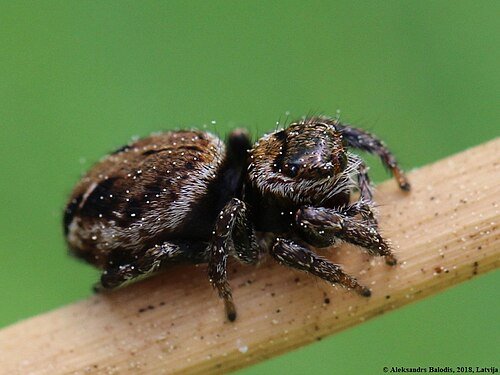
Evarcha arcuata
FotoPhoto: AfroBrazilian, CC BY-SA 4.0, originaleoriginal

Evarcha arcuata

Evarcha arcuata is a species of jumping spider of the genus Evarcha. It has a wide Palearctic distribution, occurring across Europe, Turkey, the Caucasus, Russia (from Europe to the Far East), Kazakhstan, Iran, Central Asia, China, and Japan. Wikipedia

Evarcha arcuata is a species of jumping spider of the genus Evarcha. It has a wide Palearctic distribution, occurring across Europe, Turkey, the Caucasus, Russia (from Europe to the Far East), Kazakhstan, Iran, Central Asia, China, and Japan. Wikipedia

Osservata 2 volte entro 10 km.Observed 2 times within 10 km.

Vista in: giugno (1), luglio (1).Seen in: June (1), July (1).

Per chi ospita

Gestisci un agriturismo, un B&B, un campeggio o un rifugio a Stresa o nei dintorni? Con il Kit Natura questa pagina prende il nome della tua struttura e i dati del punto esatto in cui si trova, e ricevi poster con QR, cartoncino da tavolo, libretto e caccia al tesoro per i bambini. L'anteprima è gratuita e pronta in un minuto.

Guarda l'anteprima della tua struttura